Building muscle quickly without shortcuts comes down to doing the basics extremely well: progressive strength training, enough food, enough protein, and consistent recovery. The best way to build muscle fast naturally is not a secret program or extreme supplement stack; it is a repeatable system that gives your body a reason to grow and the resources to repair. If you want faster results, your goal is to remove the common leaks that slow natural muscle growth.
How can I build muscle fast naturally?
You build muscle fast naturally by training each major muscle group consistently, adding challenge over time, eating enough calories and protein, sleeping well, and tracking your progress so you can adjust before you stall. Updated guidance from the American College of Sports Medicine emphasizes progressive resistance training for improving muscle size, function, and performance, while also noting that equipment choice and training to all-out failure are not always the deciding factors for the average healthy adult.
That means you do not need a perfect gym, a complicated split, or brutal workouts every day. You need a plan you can execute for months. Muscle grows from repeated signals: hard sets, good technique, enough weekly volume, and recovery. Miss any one of those pieces, and “fast” becomes frustrating.
Start with progressive overload, not random hard workouts
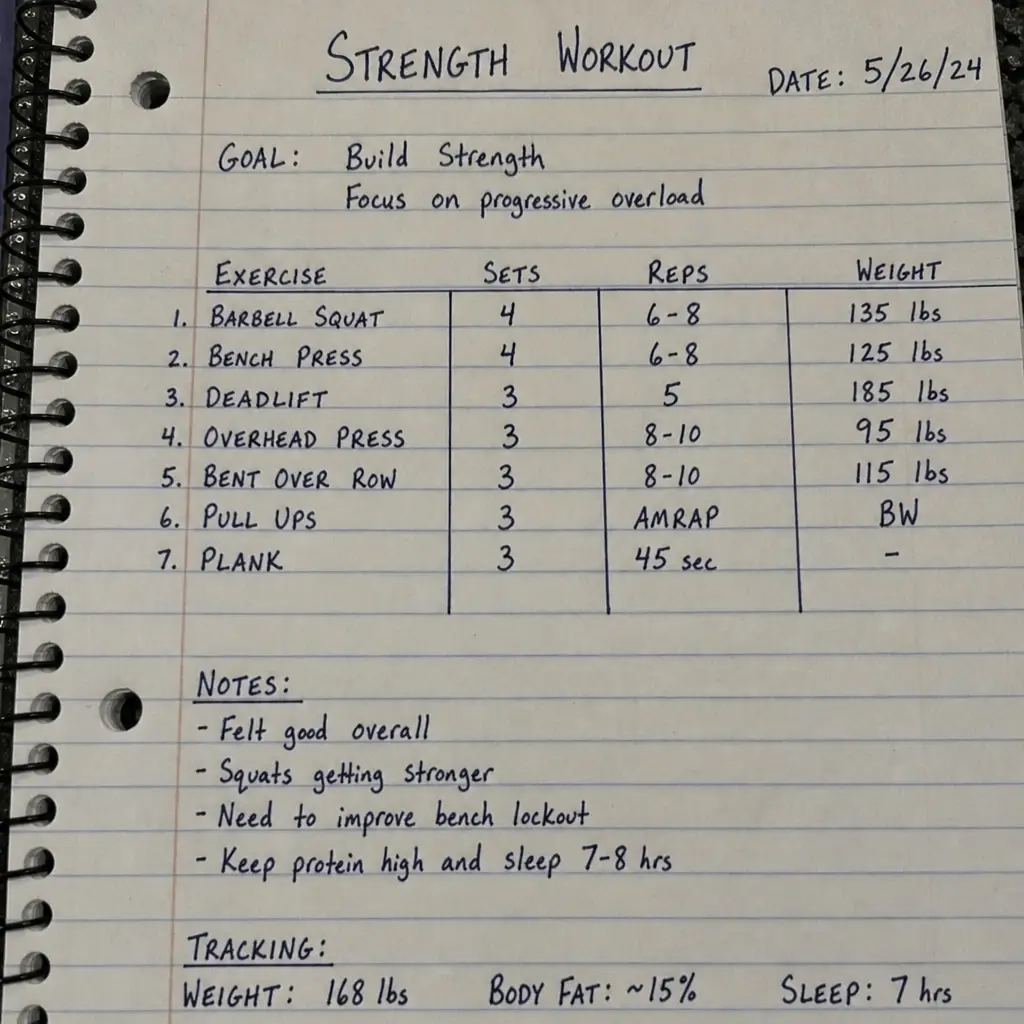
Progressive overload means your training becomes gradually more demanding. You might add weight, perform more reps with the same weight, add a set, improve your range of motion, or make your technique cleaner. The key is that your muscles experience a challenge they have not fully adapted to yet.
A common mistake is confusing sweat with stimulus. A workout can feel exhausting but still fail to train the target muscles well. For natural muscle growth, your sets should be challenging, controlled, and close enough to your limit that the muscle has a reason to adapt.
Use this simple progression model:
Choose a rep range, such as 6–10 or 8–12 reps.
Start with a weight you can lift with good form for the lower end of that range.
Add reps over time until you can hit the top of the range on all sets.
Increase the weight slightly, then repeat the process.
Log every workout so progress is visible instead of guessed.
This approach works for barbells, dumbbells, machines, cables, and bodyweight training. Your muscles respond to tension and effort, not to whether an exercise looks impressive online.
Train the whole body with enough weekly volume
To build muscle fast naturally, train every major muscle group at least weekly, and usually more than once weekly if your schedule allows. Beginners can often grow with fewer total sets because almost any well-designed resistance training is a new stimulus. As you get stronger, you may need more total work, better exercise selection, or more careful recovery.
A balanced routine should include patterns like:
Squat or leg press pattern for quads and glutes
Hip hinge pattern such as Romanian deadlifts or hip thrusts
Horizontal push such as bench press or push-ups
Horizontal pull such as rows
Vertical push such as overhead press
Vertical pull such as pull-ups or pulldowns
Direct arm, calf, core, or shoulder work as needed
You do not have to do all of these in one session. A three-day full-body plan, four-day upper/lower plan, or five-day split can all work. The “best” plan is the one that lets you train hard, recover, and add performance over time.
A practical weekly structure
If you are unsure where to begin, start with three full-body sessions per week. Each session can include one lower-body movement, one push, one pull, and one or two accessory exercises. This gives you frequent practice without overwhelming your joints, schedule, or recovery.
For example, Monday might include squats, bench press, rows, and curls. Wednesday might include deadlift variations, overhead press, pulldowns, and calf raises. Friday might include leg press, incline dumbbell press, cable rows, and lateral raises. The details can change, but the principle stays the same: train the muscles, recover, then return slightly better.
Eat enough to support growth
You cannot build new muscle tissue efficiently if your body is constantly under-fueled. Some beginners, people returning after time off, or people with higher body fat may gain muscle while maintaining or even losing weight. But if your goal is the fastest natural muscle gain, a small calorie surplus is usually the most reliable path.
Think “enough,” not “endless.” Gaining weight too quickly often adds more fat than muscle, while eating too little can leave your lifts stagnant. A useful target is a slow upward trend in body weight, paired with improving gym performance and stable waist measurements.
Focus on these nutrition anchors:
Protein at each meal to support muscle repair and growth
Carbohydrates around training to fuel hard sessions
Healthy fats for overall diet quality and hormone function
Fruits and vegetables for micronutrients and digestion
Enough fluids and sodium so performance does not drop from dehydration
If your weight and lifts have not moved for several weeks, you may need more food. If your weight is rising quickly but strength is not improving, your surplus may be too aggressive.
Prioritize protein without obsessing over timing
Protein matters because resistance training breaks down muscle proteins and your body needs amino acids to repair and build. The International Society of Sports Nutrition states that many exercising people aiming to optimize training adaptations should consume about 1.4–2.0 grams of protein per kilogram of body weight per day.
You do not need to eat every two hours, but spreading protein across the day is practical. Most people do well with three to five protein-containing meals. Examples include eggs, Greek yogurt, chicken, fish, lean beef, tofu, tempeh, lentils, cottage cheese, or a protein shake when whole food is inconvenient.
Here is a simple plate formula for muscle growth:
One palm or more of protein at each meal
One to two fists of carbs, especially near training
One thumb of fats, adjusted to calorie needs
One to two fists of colorful plants for fiber and nutrients
The best diet is the one you can repeat. If your meals are so restrictive that you abandon them by Friday, they are not helping you build muscle fast naturally.
How fast can I build muscle naturally?
Natural muscle gain is fastest when you are new to structured lifting, returning after a break, eating well, and sleeping consistently. There is no universal monthly number that applies to everyone, and credible discussions of muscle gain rates often emphasize that genetics, training history, sex, age, nutrition, and measurement method all affect results.
Beginners often notice strength improvements before major visual changes. Some of that early progress comes from better coordination and skill, not just new muscle tissue. Visible muscle growth usually becomes clearer after several months of consistent training, especially when photos, measurements, and workout logs all point in the same direction.
A realistic mindset helps. If a program promises dramatic muscle gain in a few weeks with no hard training or nutrition consistency, be skeptical. Fast natural progress is possible, but it still respects biology.
Recovery is where growth becomes visible
Training sends the signal; recovery lets your body respond. If you lift hard but sleep poorly, skip meals, and pile on stress, you make growth harder than it needs to be. The CDC notes that most adults need at least seven hours of sleep each night, and chronic short sleep is linked with broader health problems.
Recovery does not mean doing nothing. It means managing fatigue so your next workout is productive. Light walking, mobility work, easy cardio, and rest days can all support training as long as they do not interfere with your main goal.
Watch for signs that recovery is lagging:
Your lifts drop for multiple workouts in a row
Motivation crashes despite normal life stress
Joints ache more than muscles
Sleep quality gets worse
You feel sore all the time but not stronger
Appetite becomes unusually low or uncontrolled
If several of these show up, reduce training volume for a week, improve sleep, and check your food intake. More work is not always better; better-recovered work usually is.
Supplements can help, but they do not replace the plan
Supplements are optional. The foundation is still training, calories, protein, and recovery. However, a few supplements can be useful if they solve a real problem.
Protein powder is convenient when you struggle to hit your protein target with food. It is not magic; it is simply an easy protein source.
Creatine monohydrate is one of the better-supported sports supplements. The International Society of Sports Nutrition has described creatine monohydrate as highly effective for increasing high-intensity exercise capacity and lean body mass during training, with a favorable safety profile when used appropriately.
Caffeine may improve workout energy, but it can backfire if it disrupts sleep. If you train late, be cautious.
Avoid products that promise steroid-like results, hide ingredient amounts, or rely on extreme before-and-after claims. If you have a medical condition, take medications, are pregnant, or are under 18, speak with a qualified healthcare professional before using supplements.
Common mistakes that slow muscle growth
Many people ask, “How can I build muscle fast naturally?” but then repeat habits that make fast progress unlikely. The good news is that most mistakes are fixable.
Program hopping
Changing routines every week prevents you from measuring progress. Stay with a solid plan long enough to know whether it is working. Exercises can rotate occasionally, but your main lifts should be consistent enough to track.
Lifting too light forever
Good form matters, but comfort is not the goal. If every set feels easy, the muscle-building signal is weak. Most working sets should end with only a few good reps left in reserve.
Ignoring technique
Heavier weight with sloppy form often shifts tension away from the target muscle and increases irritation. Control the lowering phase, use a range of motion you can own, and avoid turning every rep into a full-body heave.
Under-eating on training days
If performance fades halfway through your workout, your nutrition may be the issue. Carbs before training and a protein-rich meal afterward can make consistency easier.
Expecting soreness to prove progress
Soreness can happen, especially after new exercises, but it is not the goal. Progress is better measured by stronger lifts, better reps, improved measurements, and visual changes over time.
A simple checklist for faster natural gains
Use this checklist weekly. If progress stalls, the missing item is often obvious.
Train each major muscle group consistently.
Track exercises, sets, reps, and loads.
Add reps or weight when form allows.
Eat enough total calories to support growth.
Hit a daily protein target that fits your body size.
Sleep at least seven hours whenever possible.
Keep most sets challenging but controlled.
Take rest days before fatigue becomes a wall.
Measure progress with photos, body weight trends, and performance.
Stay patient for months, not days.
FAQ
What is the best way to build muscle fast naturally?
The best way is to combine progressive resistance training, a slight calorie surplus, adequate protein, and consistent sleep. No single exercise or food replaces the full system.
Can I build muscle fast naturally at home?
Yes, especially as a beginner. Use push-ups, pull-ups or rows, squats, lunges, hip hinges, bands, dumbbells, or weighted backpacks. The key is making exercises progressively harder.
Do I need to train to failure for muscle growth?
Not always. Hard sets matter, but all-out failure on every set can create fatigue that hurts your next workout. Many people grow well by stopping with one to three good reps left.
How much protein do I need?
Many active people aiming for muscle growth do well in the range of 1.4–2.0 grams per kilogram of body weight per day, based on ISSN guidance.
Should I bulk or stay lean?
If you are already lean and want faster muscle gain, a small surplus can help. If you carry more body fat or are new to lifting, you may be able to build muscle while keeping calories closer to maintenance.
Accelerate Your Natural Gains with a Proven Blueprint
Building muscle naturally requires more than just lifting heavy; it demands a precise balance of progressive overload, optimal recovery, and a smart, calorie-conscious nutrition plan designed for hypertrophy.
Cutting through the noise of conflicting fitness myths and internet advice can easily stall your progress, but you don’t have to guess your way to a stronger, more muscular physique. Contact us today to connect with our certified strength and nutrition coaches, and let’s build a personalized, science-backed muscle-building program designed to fast-track your natural gains safely and efficiently.