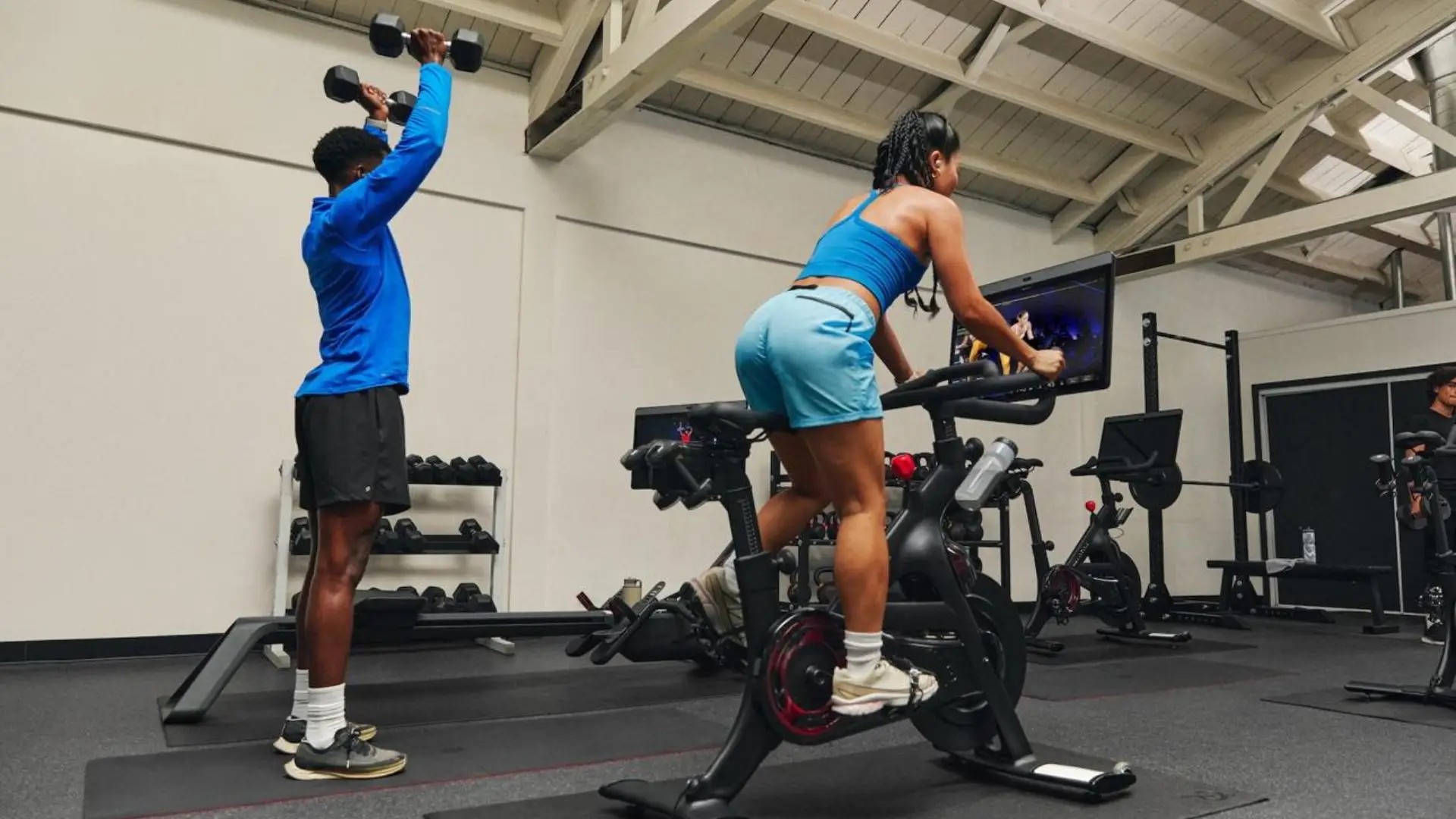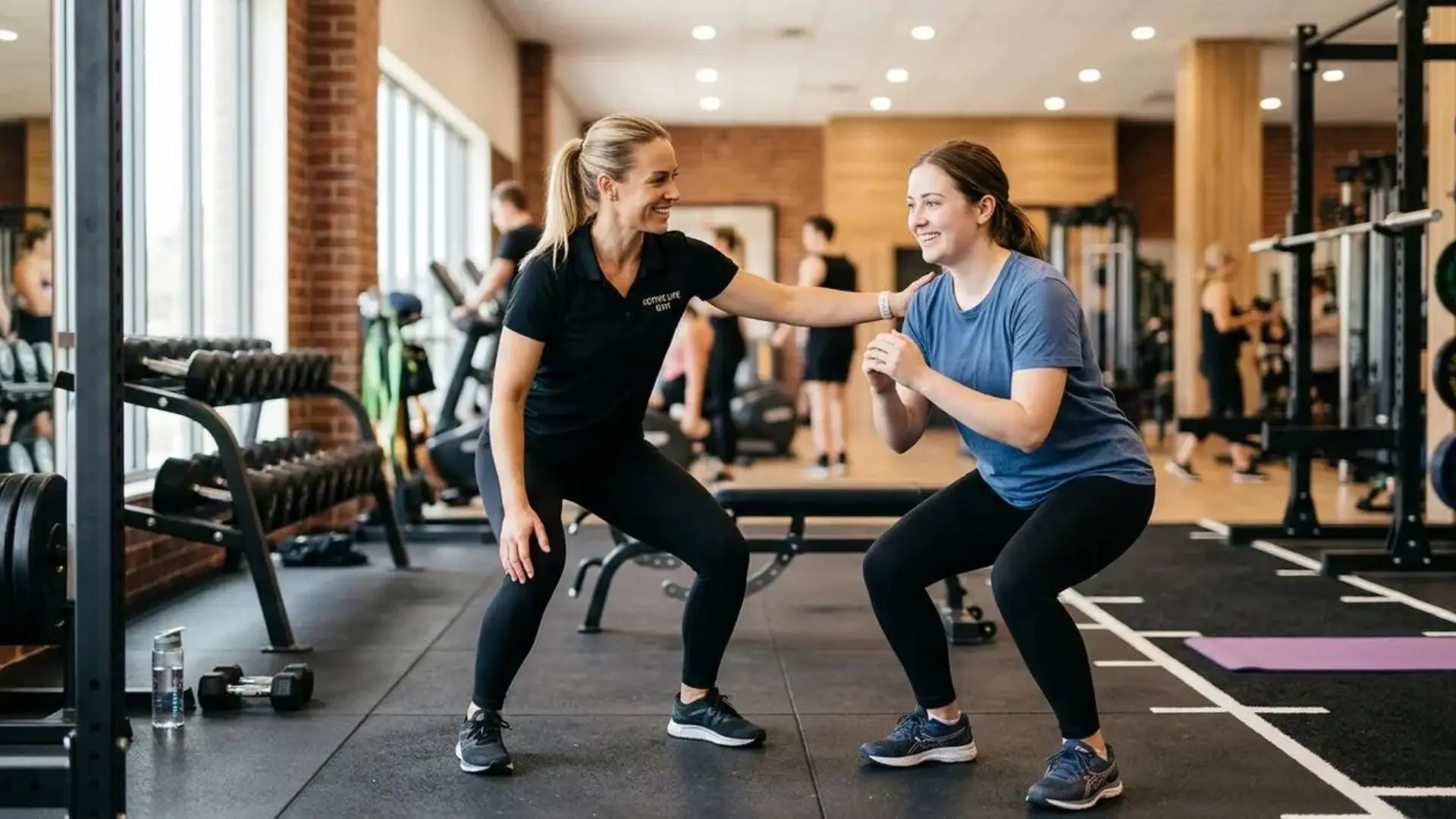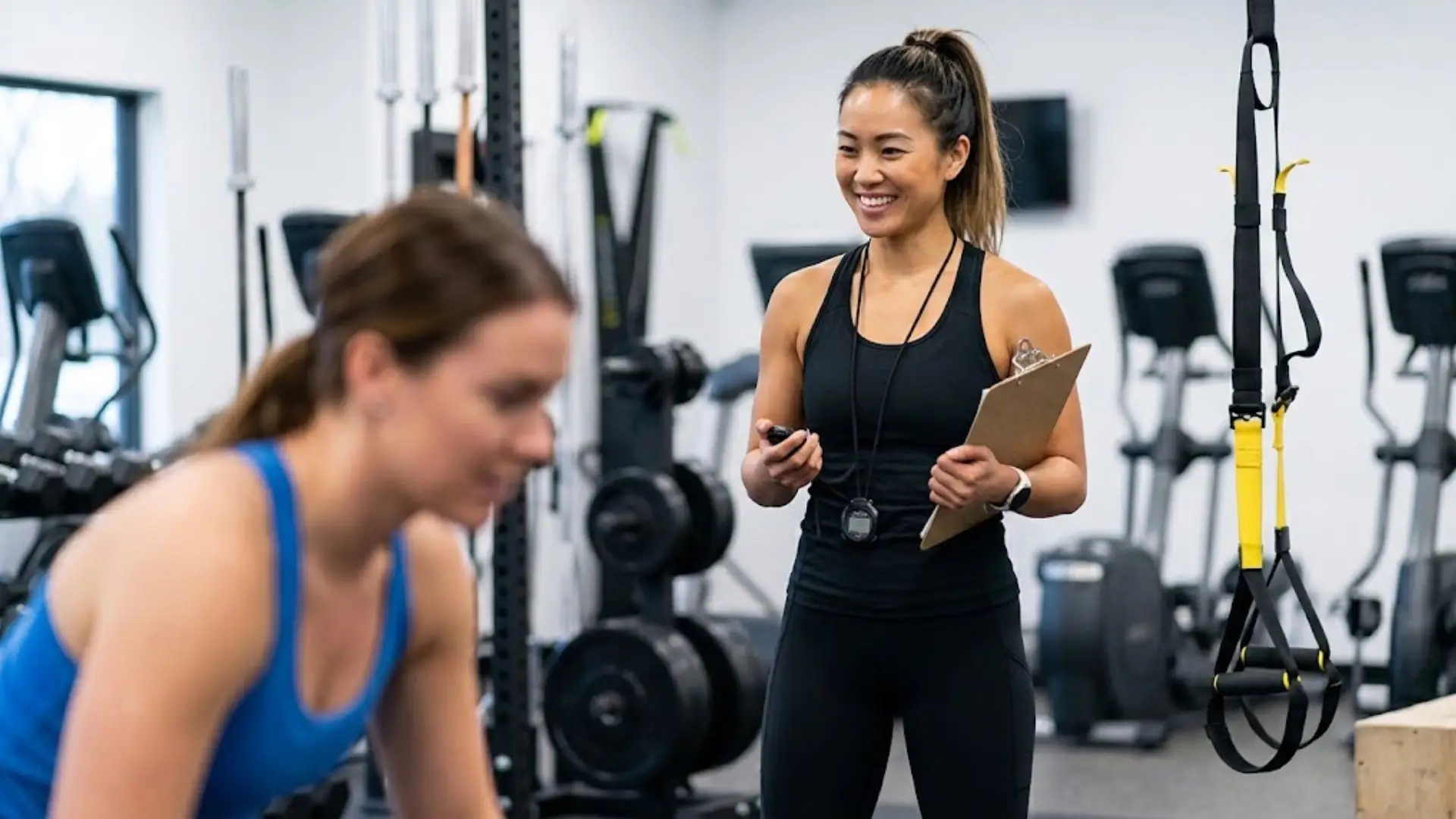
Online personal training can be worth it if you want expert workout guidance, flexible scheduling, and a plan that fits your real life instead of a gym timetable. It is not the same experience as having a trainer next to you, but the right coach, app, or program can make fitness more consistent, affordable, and personalized. If you are comparing online personal training, internet fitness training, online fitness programs, and home workout plans, the best choice depends on your goals, budget, motivation style, and need for feedback.
Is online personal training worth it?
Yes, online personal training is worth it for many people, especially those who need structure, accountability, and flexibility without commuting to a gym or meeting a trainer at fixed times. It works best when the program includes clear workouts, progress tracking, form guidance, regular check-ins, and adjustments based on your results. It may not be ideal if you are brand new to exercise, recovering from injury, or need hands-on coaching for complex lifts, but for general strength, weight management, conditioning, and habit-building, it can be a practical and effective option.
The real value comes from consistency. A workout plan only helps if you can actually follow it. Online coaching removes many common barriers: travel time, limited trainer availability, crowded facilities, and the feeling that fitness has to happen in a specific place. When your plan lives on your phone and adapts to your schedule, it becomes easier to keep moving even during busy weeks.
That said, not every online fitness option is personal training. Some services offer custom coaching with messaging and video review, while others provide general workout libraries. Before signing up, it helps to understand what you are really buying.
What online personal training usually includes
Online personal training is a remote coaching relationship where a trainer designs, delivers, and updates your workouts without needing to meet you in person. Depending on the service, it may include video calls, app-based workouts, messaging, nutrition guidance, movement demonstrations, progress reports, and habit tracking.
A well-built program usually includes several pieces working together:
Initial assessment: Your trainer asks about goals, training history, equipment, injuries, schedule, and preferences.
Personalized workouts: Your sessions are written around your current ability, available equipment, and target outcome.
Exercise instructions: Programs often include videos, written cues, tempo guidance, or notes on how each movement should feel.
Progress tracking: You may log reps, weights, sets, energy levels, photos, measurements, or workout completion.
Communication: Many trainers offer chat support, weekly check-ins, form reviews, or scheduled calls.
Program updates: Your plan should change as you get stronger, busier, more confident, or closer to your goal.
This is different from downloading a random workout from social media. Good internet fitness training gives you a system, not just a sweat session. The trainer’s job is to help you progress safely and consistently, while your job is to complete the sessions honestly and communicate what is working.
The biggest benefits are flexibility, structure, and accountability
The main reason people choose online personal training is that it fits into life more easily than traditional training. You can train at home, in a gym, outside, or while traveling. If your schedule changes from week to week, your plan can be built around short sessions, longer workouts, or a mix of both.
Online coaching also gives you structure. Instead of guessing which exercises to do, how many sets to complete, or when to increase difficulty, you follow a plan with a purpose. That structure matters because many people do not quit fitness from lack of effort; they quit because they do not know what to do next.
Accountability is another major benefit. Knowing that someone will review your progress can make it easier to show up. Even a simple weekly check-in can turn vague intentions into specific action.
Here is where online personal training can be especially helpful:
You want a plan but not a gym appointment. Remote coaching lets you train when your day allows.
You feel overwhelmed by fitness advice. A trainer can narrow your focus to the few actions that matter most.
You travel or work irregular hours. Your workouts can move with you instead of depending on one location.
You prefer privacy. Home workout plans can help you build confidence before entering a gym.
You need steady progression. A coach can adjust intensity, volume, and exercise selection over time.
The convenience is not just a nice bonus. It can be the reason the plan survives real life.
When online coaching may not be the best fit
Online training has limits. If you need constant in-person feedback, hands-on correction, or immediate spotting, remote coaching may feel incomplete. A video review can help, but it does not fully replace a trainer standing beside you during a heavy lift or complex movement.
It may also be a poor fit if you know you will ignore app notifications, skip logging workouts, or avoid communicating with your coach. Online fitness programs rely heavily on your honesty. If you do not report missed sessions, pain, fatigue, or confusion, the trainer cannot adjust the plan accurately.
You may want in-person support, medical clearance, or specialized professional care if you are dealing with pain, injury, pregnancy, a medical condition, or a long break from exercise. A qualified trainer can still be part of your support system, but they should stay within their scope and refer you out when needed.
Online personal training is not magic. It is a tool. It works when the support matches your needs and when you are willing to participate actively.
How does online personal training compare with in-person training?
Online personal training is usually more flexible and often easier to fit into a busy schedule, while in-person training offers immediate feedback, physical presence, and a more hands-on coaching experience. The better choice depends on how much supervision you need, how independently you can train, and whether convenience or real-time coaching matters more to you.
A simple comparison can make the decision clearer:
Factor | Online personal training | In-person personal training |
|---|---|---|
Scheduling | Train when it suits you | Usually requires fixed appointments |
Location | Home, gym, travel, or outdoors | Usually one gym or studio |
Feedback | Messages, videos, calls, app notes | Immediate coaching during the session |
Accountability | Check-ins and workout tracking | Face-to-face appointment commitment |
Independence | Requires self-direction | Trainer guides the session live |
Best for | Flexible routines, habit-building, general fitness | Technique-heavy training, beginners needing close supervision |
Some people do best with a hybrid approach. For example, you might book a few in-person sessions to learn form, then continue with online coaching for long-term programming. Others may use online training for weekday workouts and occasional in-person sessions for skill checks.
There is no universal winner. The best format is the one you will use consistently and safely.
The quality of the trainer matters more than the format
A strong online coach does more than send a spreadsheet of exercises. They ask good questions, explain the purpose behind your plan, respond to feedback, and adjust your workouts when life gets messy. They should also respect your starting point instead of pushing a one-size-fits-all routine.
Before choosing a trainer or program, look for signs of quality:
Clear intake process: They should ask about goals, injuries, equipment, training history, schedule, and preferences.
Realistic programming: The plan should match your current capacity, not someone else’s highlight reel.
Exercise demonstrations: You should know how to perform each movement and what mistakes to avoid.
Communication expectations: You should understand how often check-ins happen and how quickly responses usually come.
Progression strategy: The program should explain how workouts become harder, easier, or more specific over time.
Professional boundaries: Be cautious if a trainer promises extreme results, gives medical advice outside their role, or pushes unnecessary supplements.
Good coaching feels collaborative. You should be able to say, “This exercise bothers my shoulder,” “I only have 25 minutes today,” or “I missed two sessions this week,” and get a practical adjustment instead of judgment.
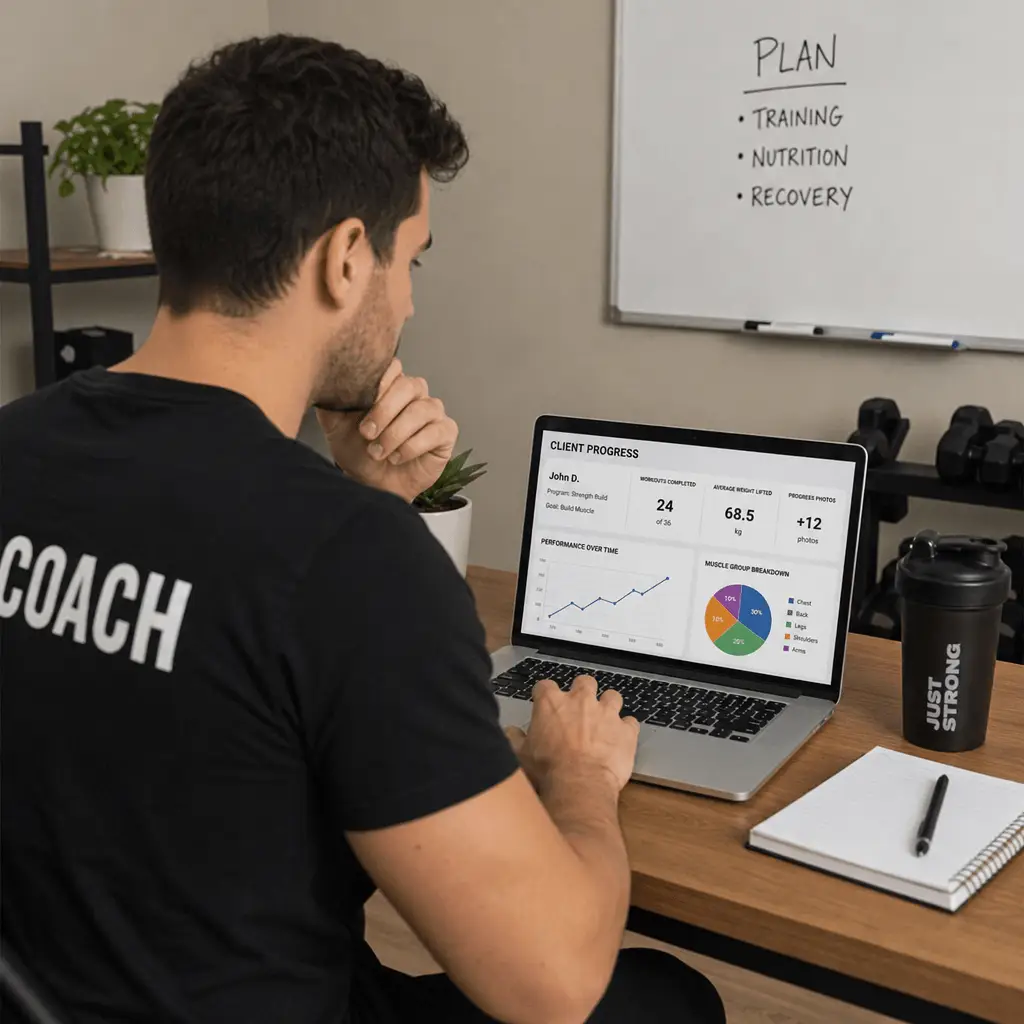
Home workout plans can be simple and effective
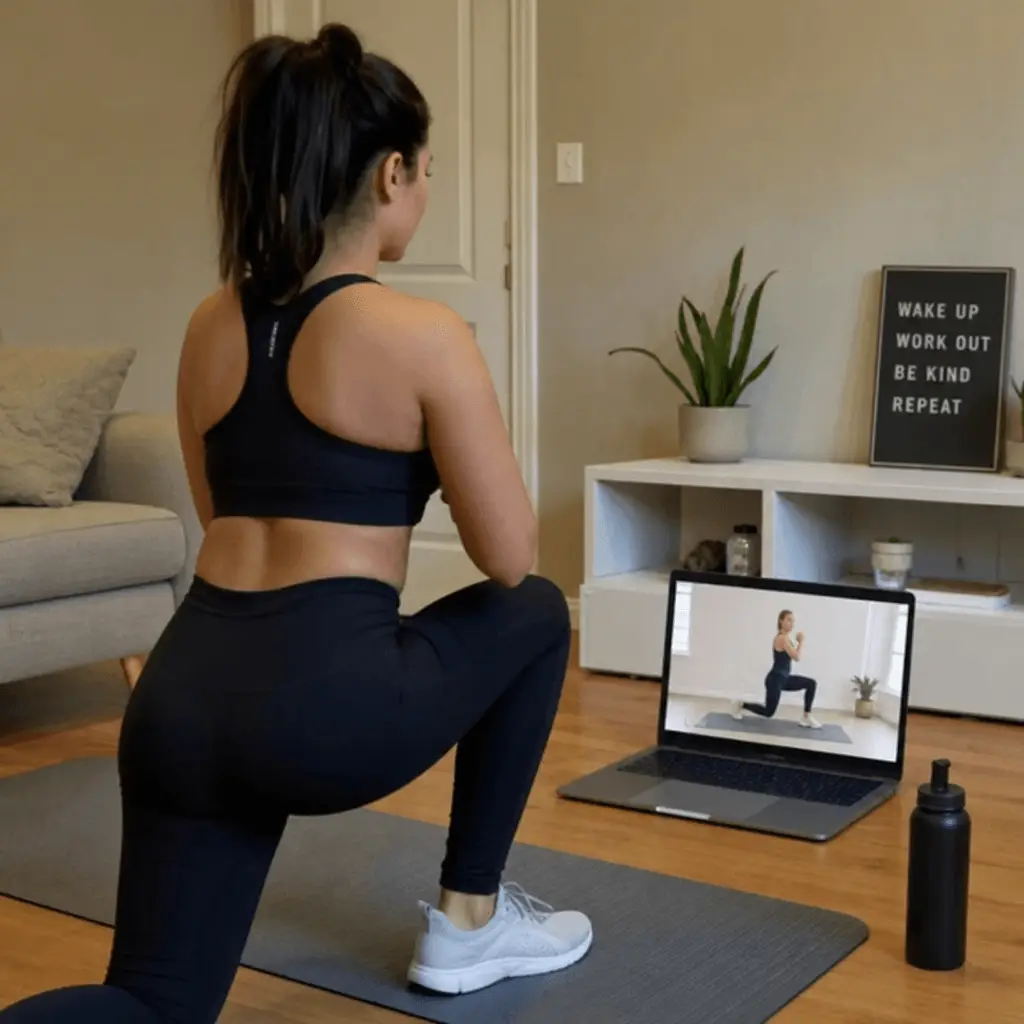
One reason online training has become popular is that many people do not need a fully equipped gym to make progress. Home workout plans can be built around bodyweight exercises, resistance bands, dumbbells, kettlebells, suspension trainers, or whatever equipment you already own. A good coach can design sessions around your space rather than forcing you into a setup you do not have.
For beginners, this can reduce friction. You do not have to commute, wait for machines, or feel watched while learning basic movements. For experienced exercisers, home training can still be challenging if the plan uses smart progression, tempo, unilateral movements, supersets, and conditioning blocks.
A practical home-based session might include:
A short warm-up to prepare joints and raise body temperature
Two to four strength movements focused on major muscle groups
A core or mobility element based on your needs
A brief conditioning finisher if your goal includes endurance or fat loss
Notes on how to progress next time
The best home plans are not random collections of squats and push-ups. They are organized around progression, recovery, and repeatability.
How to decide if it is right for you
The easiest way to decide is to match the service to your behavior, not your ideal self. If you know you like independence, online coaching may feel freeing. If you know you need someone physically present to stay engaged, in-person training may be worth the extra coordination.
Use this checklist before you commit:
Your goal is clear enough to guide a plan. You do not need a perfect goal, but you should know whether you want strength, fat loss, mobility, conditioning, consistency, or confidence.
You can train without constant supervision. Online training works best when you can follow instructions and ask questions when needed.
You will track your workouts. Logging helps your trainer make useful changes.
You have a realistic schedule. A three-day plan you complete beats a six-day plan you abandon.
You understand the communication style. Know whether support happens through an app, email, text, video, or calls.
You have enough equipment for the plan. If you train at home, confirm what is required before paying.
You are comfortable sharing feedback. The more accurate your feedback, the more personal your program becomes.
If most of these points sound reasonable, online personal training may be a strong fit. If several feel impossible, you may need a different format or a more supportive starting point.
Common mistakes to avoid
The biggest mistake is choosing based only on appearance or popularity. A trainer’s physique or social media following does not automatically mean they can coach your body, schedule, limitations, and goals. Look for clarity, professionalism, and personalization instead.
Another mistake is expecting instant transformation. Sustainable fitness usually comes from repeated ordinary actions: completing workouts, increasing effort gradually, eating in a way that supports your goals, sleeping enough, and staying patient. Online training can organize those actions, but it cannot do them for you.
Avoid these common pitfalls:
Signing up without knowing what support is included
Choosing a program that requires equipment you do not have
Skipping check-ins when workouts get difficult
Comparing your progress to someone else’s plan
Ignoring pain because you do not want to “fall behind”
Changing programs every few weeks before one has time to work
A good rule: if the plan feels impossible to repeat next month, it is probably too aggressive now.
FAQ
Is online personal training good for beginners?
It can be, as long as the trainer provides clear instructions, beginner-friendly progressions, and opportunities to ask questions. If you feel unsure about basic movement technique, you may benefit from video form checks or a few in-person sessions first.
Are online fitness programs the same as personal training?
Not always. Online fitness programs may be pre-made for a broad audience, while online personal training should be more tailored to your goals, equipment, experience, and feedback. Both can be useful, but they offer different levels of support.
Can I build strength with home workout plans?
Yes, especially if the plan includes progressive overload, proper exercise selection, and enough consistency. You may eventually need more resistance or equipment, but many people can build a strong foundation at home.
How often should I communicate with an online trainer?
That depends on the service, but weekly check-ins are common and practical. More frequent communication may help if you are new, have a specific deadline, or need extra accountability.
What should I ask before joining an internet fitness training program?
Ask how workouts are customized, how progress is tracked, what equipment is required, how often the plan changes, and what kind of support is included. You should also ask what happens if a movement causes discomfort or your schedule changes.
Get All the Accountability of a Personal Trainer—Without the Gym Price Tag
Online personal training breaks down the biggest barriers to reaching your goals, offering custom workout programming, video form checks, and daily accountability at a fraction of the cost of traditional in-person coaching. You get total freedom to train on your own schedule, in your own space, with expert guidance following you every step of the way.
If you’re wondering whether remote coaching can deliver the structure and results you need, we’re here to walk you through it. Contact us today to schedule a free initial consultation and discover how online personal training can transform your fitness journey.