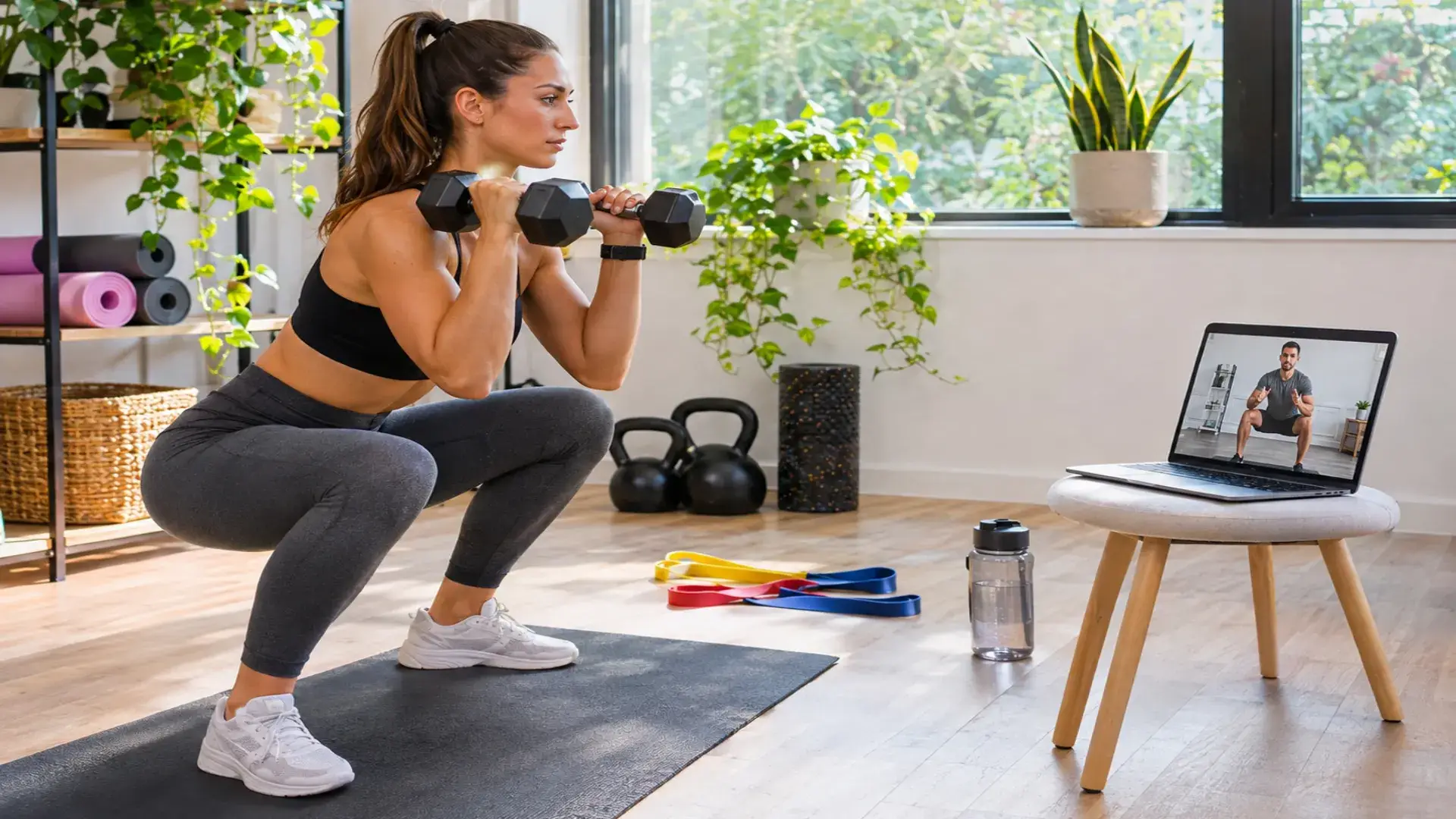
Online personal training makes it possible to work toward your fitness goals from home, without needing a full gym setup. Whether you want to lose weight, build muscle, improve your strength, or become more active, you can follow an effective workout program with just a few basic pieces of equipment.
One of the biggest advantages of online coaching is flexibility. Your workouts can be designed around the space, equipment, and schedule you already have. You don’t need to spend hundreds of dollars on machines before getting started.
If you’re considering online personal training in Potomac, Maryland, here’s a look at the equipment that can help you get the most out of your workouts.
Do You Need Equipment for Online Personal Training?
No. You can start online personal training without purchasing any equipment.
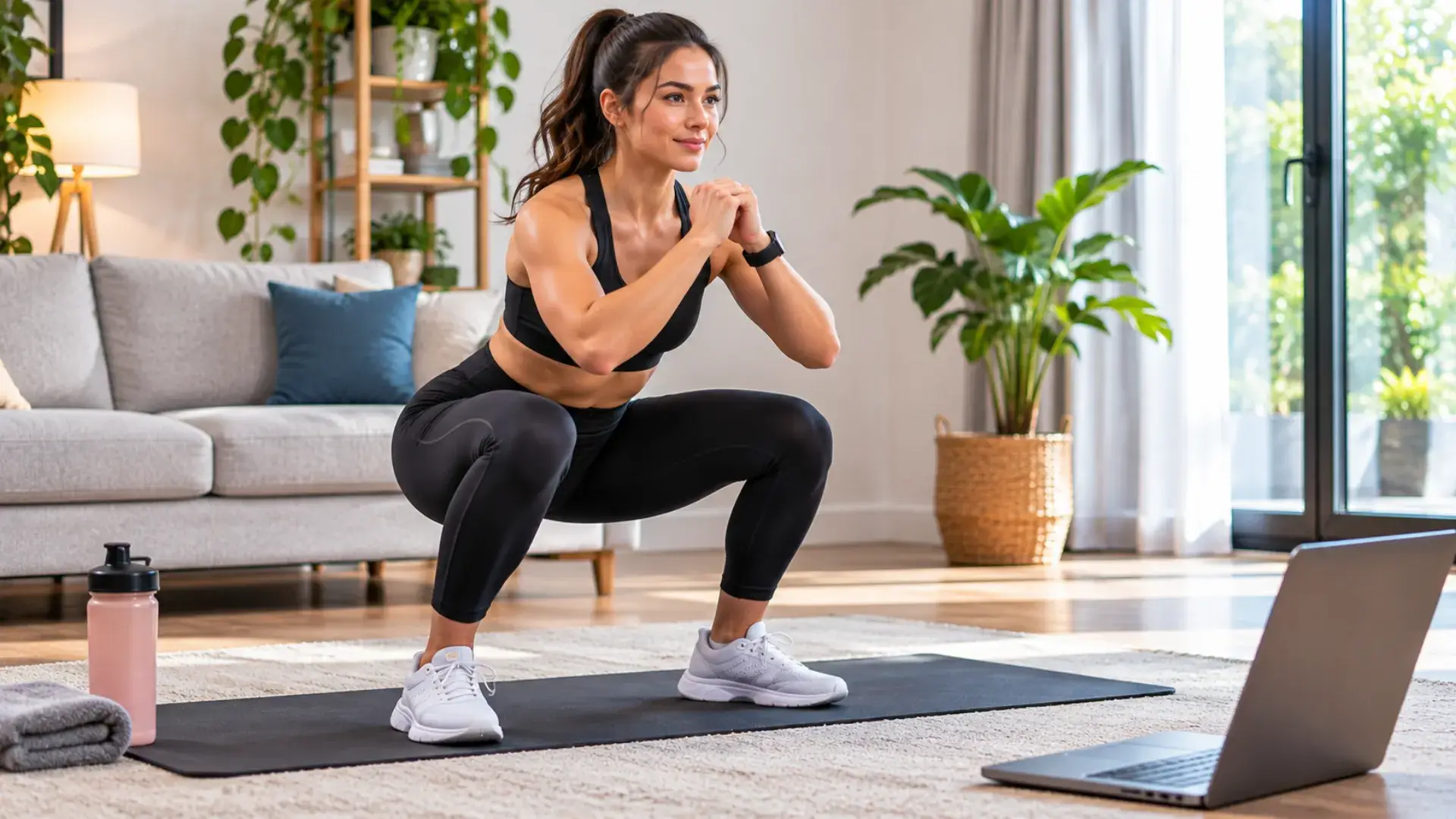
Many effective exercises use your own body weight as resistance. Squats, lunges, push-ups, planks, and glute bridges can help develop strength, improve coordination, and build a foundation for more challenging workouts.
If you’re new to exercise, bodyweight movements are often a practical starting point. They allow you to learn basic movement patterns before adding resistance.
As you become stronger, however, additional equipment can give you more exercise options and help you increase the difficulty of your workouts.
A good online personal trainer will consider your available equipment when creating your program. If you only have a small workout area and a few basic items, your trainer can still develop a routine that supports your goals.
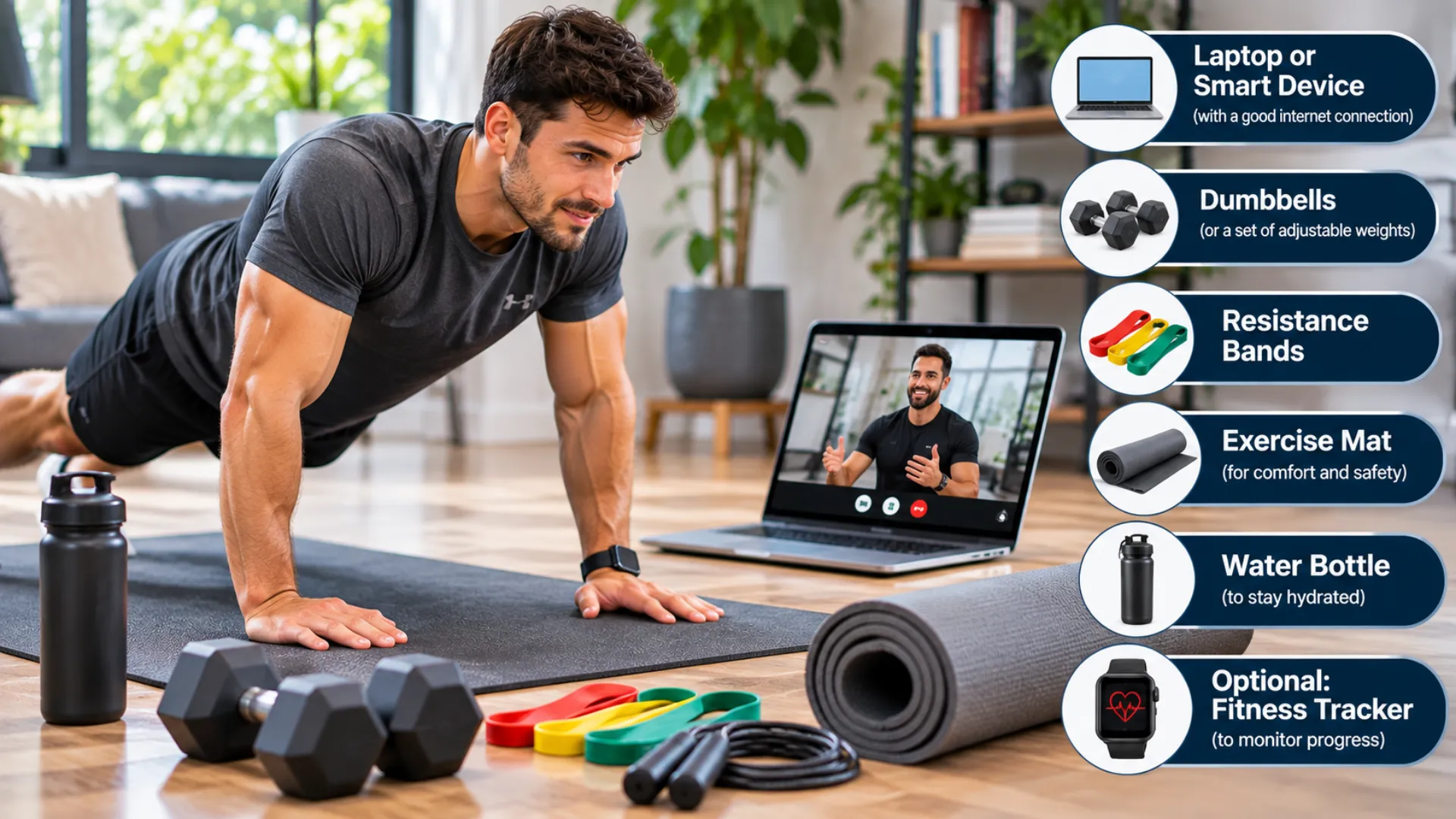
7 Pieces of Equipment for Online Personal Training
You don’t need every piece of fitness equipment available. Start with a few useful items and add more as your training needs change.
1. Adjustable Dumbbells
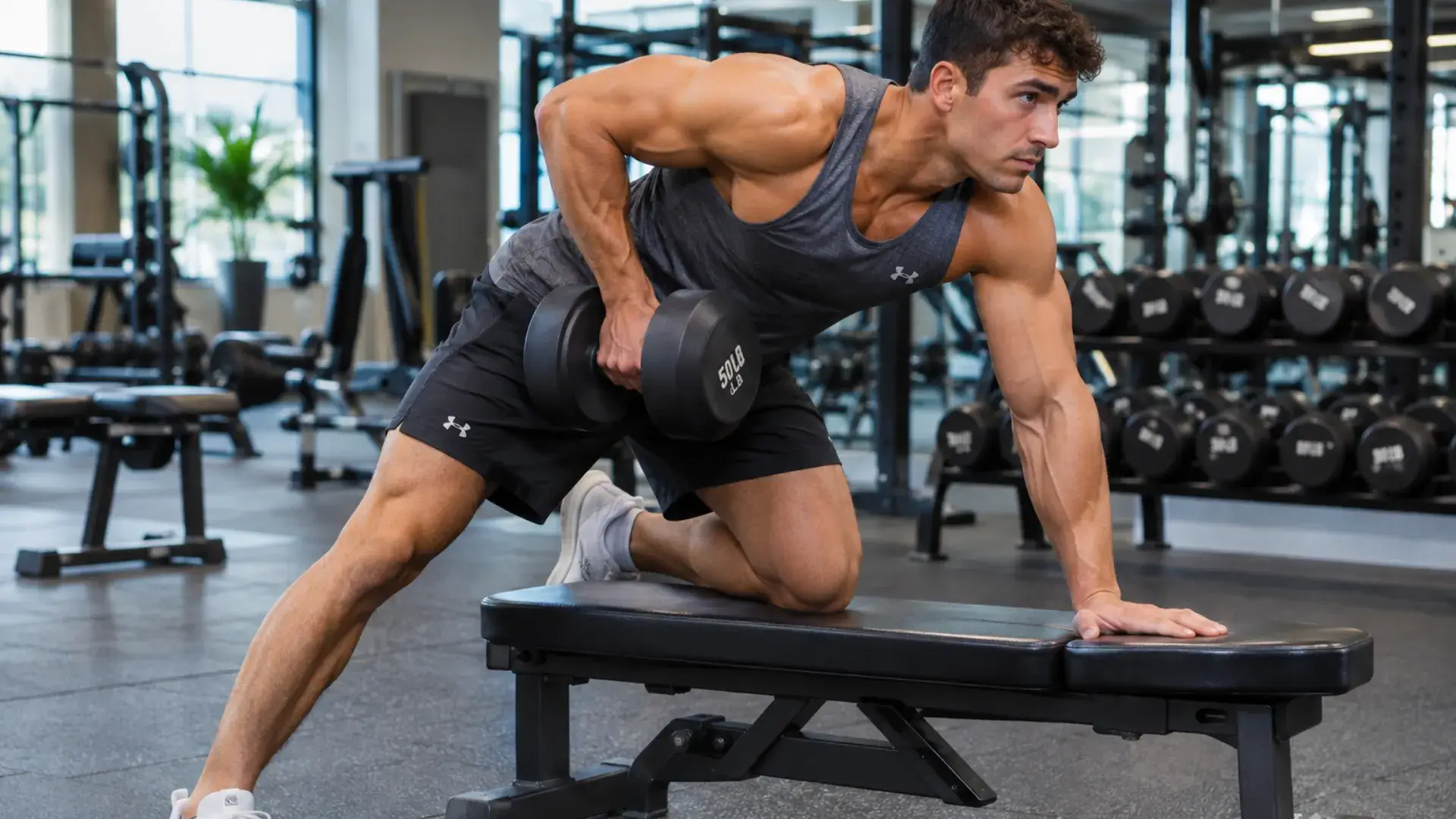
Dumbbells are among the most useful pieces of equipment for home strength training. They allow you to perform exercises that target nearly every major muscle group.
Some exercises you can do with dumbbells include:
Goblet squats
Dumbbell rows
Shoulder presses
Bicep curls
Romanian deadlifts
Chest presses
Lunges
Adjustable dumbbells are especially helpful if you have limited storage space. Instead of buying several pairs, you can change the resistance depending on the exercise.
Start with a manageable weight that allows you to complete each movement with proper technique. As your strength improves, you can gradually increase the resistance.
2. Resistance Bands
Resistance bands are affordable, lightweight, and easy to store. They’re also useful for beginners who want to introduce resistance without immediately purchasing heavier weights.
You can use resistance bands for:
Banded squats
Glute bridges
Lateral walks
Standing rows
Chest presses
Shoulder exercises
Assisted stretching
Different bands provide different resistance levels. A set with light, medium, and heavy options gives you more flexibility when following a customized workout plan.
Bands can also help you perform exercises when dumbbells aren’t practical. They’re a convenient option for people who travel or prefer to exercise in different locations.
3. Exercise Mat
An exercise mat provides a comfortable surface for floor-based movements. It’s particularly useful if you’re working out on hardwood, tile, or another hard surface.
You can use a mat for:
Planks
Crunches
Sit-ups
Bird dogs
Glute bridges
Stretching
Mobility exercises
Choose a mat with enough cushioning to support your knees, elbows, and back. It should also provide enough grip to help prevent slipping during exercise.
4. Kettlebell
A kettlebell is another useful tool for strength and conditioning. Its shape allows you to perform movements that combine strength, balance, and coordination.
Common kettlebell exercises include:
Kettlebell deadlifts
Goblet squats
Kettlebell swings
Farmer’s carries
Single-arm rows
You don’t need several kettlebells to begin. One suitable weight can provide plenty of exercise options.
However, some movements, particularly kettlebell swings, require proper instruction. Ask your online trainer for a demonstration and feedback before attempting unfamiliar exercises.
5. Stable Workout Bench
A workout bench gives you more options for upper-body and lower-body exercises. It’s useful if your program includes dumbbell chest presses, supported rows, step-ups, or seated shoulder presses.
An adjustable bench offers additional flexibility because you can change its angle for different exercises.
If you don’t have room for a bench, your trainer may be able to suggest suitable alternatives. Some exercises can be performed on the floor or with a stable household surface, provided it’s safe for the movement.
6. Pull-Up Bar
A doorway pull-up bar can be useful for people who want to develop upper-body strength.
Pull-ups and chin-ups work several muscles, including the back, shoulders, and arms. However, these exercises can be challenging for beginners.
You can start with assisted variations or other pulling exercises using resistance bands and dumbbells.
Always check that a pull-up bar is correctly installed and suitable for its intended use before exercising.
7. Smartphone, Tablet, or Computer
Your workout equipment isn’t limited to weights and exercise accessories. You’ll also need a device to communicate with your online personal trainer.
A smartphone, tablet, or computer can help you:
Join virtual training sessions.
Watch exercise demonstrations.
Receive your customized workout plan.
Record and submit exercise videos for form feedback.
Track your workout progress.
Communicate with your trainer.
A stable internet connection and a camera that can capture your movements are helpful during live sessions. Position your device where your trainer can see your full body when reviewing your technique.
What Is the Best Equipment for Beginners?
If you’re just starting your fitness journey, avoid buying too many things at once. A few versatile items are enough to build a useful home workout setup.
Here’s a simple beginner equipment list:
| Equipment | Main purpose |
|---|---|
| Exercise mat | Floor exercises and stretching |
| Resistance bands | Light to moderate resistance |
| Adjustable dumbbells | Full-body strength training |
| Smartphone or tablet | Online coaching and workout instructions |
You can begin with the mat and resistance bands, then purchase dumbbells when you’re ready for additional resistance.
For more guidance on getting started, read our article, Can Beginners Use an Online Personal Trainer?. It explains how online coaching can help beginners learn exercises, follow personalized programs, and stay accountable.
Can You Do Online Personal Training Without a Home Gym?
Absolutely. A dedicated home gym isn’t a requirement for online personal training.
You can create a workout area in a spare bedroom, living room, or another suitable space. The important thing is having enough room to move safely and perform your exercises without hitting furniture or other objects.
A simple workout can include:
Bodyweight squats
Incline push-ups
Reverse lunges
Glute bridges
Planks
Standing calf raises
These movements can help develop strength and improve general fitness without requiring expensive equipment.
If you want more ideas, check out Can I Get Fit at Home Without Equipment?. It covers ways to exercise at home using bodyweight movements and a simple workout routine.
How Does Your Equipment Affect Your Workout Plan?
The equipment you have available can influence which exercises your trainer includes in your program.
For example, someone with dumbbells and resistance bands may have more options for progressive strength training than someone relying entirely on bodyweight exercises.
However, having more equipment doesn’t automatically mean you’ll get better results. Your program still needs to match your fitness level, goals, and ability to recover between workouts.
A well-designed strength routine should include exercises that target different movement patterns, such as:
Squatting for the legs and glutes
Hinging for the hamstrings and glutes
Pushing for the chest, shoulders, and triceps
Pulling for the back and biceps
Core exercises for stability
Our guide on What Is the Best Strength Training Program? explains how to organize exercises and gradually increase the challenge of your workouts.
If your goal is to build muscle, you can also read How Can I Build Muscle Fast?. It discusses progressive overload, strength training, nutrition, and recovery.
How Often Should You Use Your Home Workout Equipment?
Your training frequency depends on your experience, goals, schedule, and recovery needs.
Many beginners can start with two or three strength-training sessions per week. This gives you time to practice movements while allowing your muscles to recover between workouts.
For example, a simple weekly routine could look like this:
Monday: Full-Body Strength
Dumbbell squats
Push-ups
Dumbbell rows
Glute bridges
Planks
Wednesday: Full-Body Strength
Reverse lunges
Dumbbell shoulder presses
Resistance band rows
Romanian deadlifts
Dead bugs
Friday: Full-Body Strength
Goblet squats
Dumbbell chest presses
Resistance band pull-aparts
Glute bridges
Side planks
You can add walking, cycling, or other enjoyable cardio activities on your non-strength-training days.
For more information about planning your routine, read How Many Workouts Should Beginners Do Each Week?.
Remember that this is a general example. Your trainer should adjust the exercises, sets, repetitions, and resistance to your individual needs.
Tips for Setting Up Your Home Workout Space
Before starting online personal training, take a few minutes to prepare your workout area.
Keep these tips in mind:
Choose a suitable space: Make sure you have enough room to perform exercises comfortably.
Keep equipment organized: Store dumbbells, bands, and other accessories where you can access them easily.
Check your flooring: Avoid slippery surfaces and remove objects that could cause you to trip.
Position your camera: Make sure your trainer can see your movements during virtual sessions.
Keep water nearby: Stay hydrated throughout your workout.
Avoid unnecessary purchases: Buy equipment based on your actual training program rather than guessing what you might need.
A simple, organized workout space can make it easier to follow your training schedule consistently.
Start Online Personal Training with the Equipment You Have
You don’t need a complete home gym to make progress with online personal training. Bodyweight exercises, resistance bands, and a pair of dumbbells can provide enough variety for many effective strength and fitness programs.
The right equipment depends on your goals, experience, available space, and budget. A personalized workout plan can help you get the most out of what you already own while identifying which items may be worth purchasing later.
If you’re ready to work toward better strength, weight management, or overall fitness, Potomac Online Personal Training can help you build a program around your needs and available equipment.
Ready to get started? Contact Potomac Online Personal Training today to schedule your free consultation. Discuss your fitness goals, available workout space, and equipment so you can take the next step toward a more consistent fitness routine.