You don’t need an expensive gym membership, exercise machines, or a collection of weights to get fit. If you have enough space to move around, you can start improving your strength, endurance, flexibility, and overall fitness right at home.
Bodyweight exercises use your own body as resistance. Movements such as squats, push-ups, lunges, and planks can challenge different muscle groups and help you develop a strong fitness foundation.
Whether your goal is to lose weight, build muscle, or become more active, home workouts can be an effective option. The key is following a consistent routine, choosing exercises that match your ability, and gradually making your workouts more challenging.
Here’s how to get fit at home without equipment and build a routine you can maintain.
Can You Really Get Fit Without Gym Equipment?
Absolutely. Your body provides resistance during many exercises, allowing you to develop strength without dumbbells, barbells, or machines.
Bodyweight training can improve several areas of fitness, including:
Muscular strength: Exercises such as push-ups, squats, and lunges challenge your muscles.
Cardiovascular endurance: Activities such as jumping jacks, marching, and jogging in place increase your heart rate.
Core stability: Planks, dead bugs, and mountain climbers strengthen your abdominal and stabilizing muscles.
Flexibility and mobility: Stretching and controlled movements help improve your range of motion.
Balance and coordination: Single-leg exercises and controlled movements develop body awareness.
You can begin with simple exercises and gradually increase the difficulty as your fitness improves.
7 Best Exercises to Get Fit at Home Without Equipment
You don’t need dozens of exercises to create an effective home workout. Start with movements that target your major muscle groups.
Here are seven beginner-friendly exercises to include in your routine.
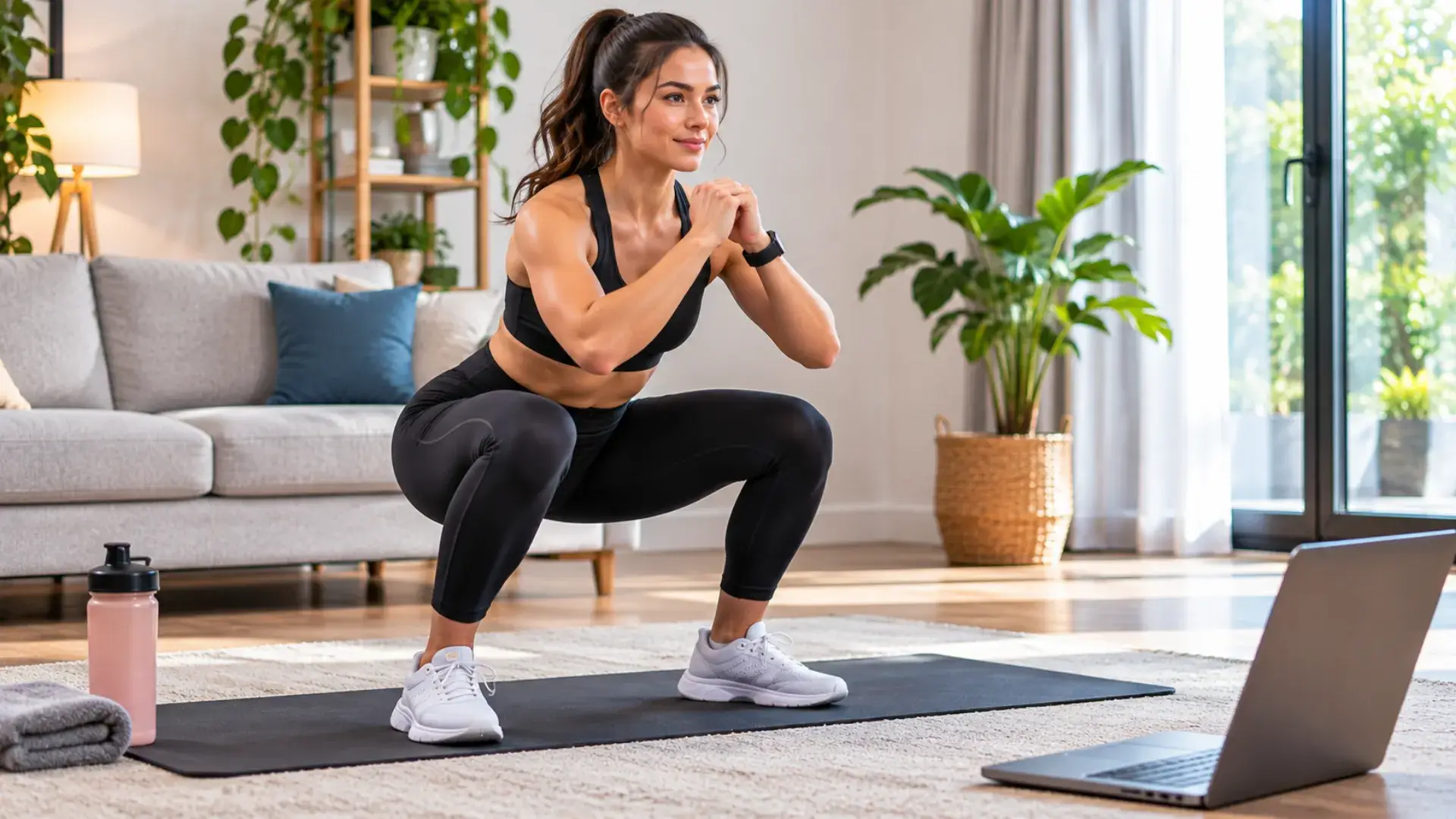
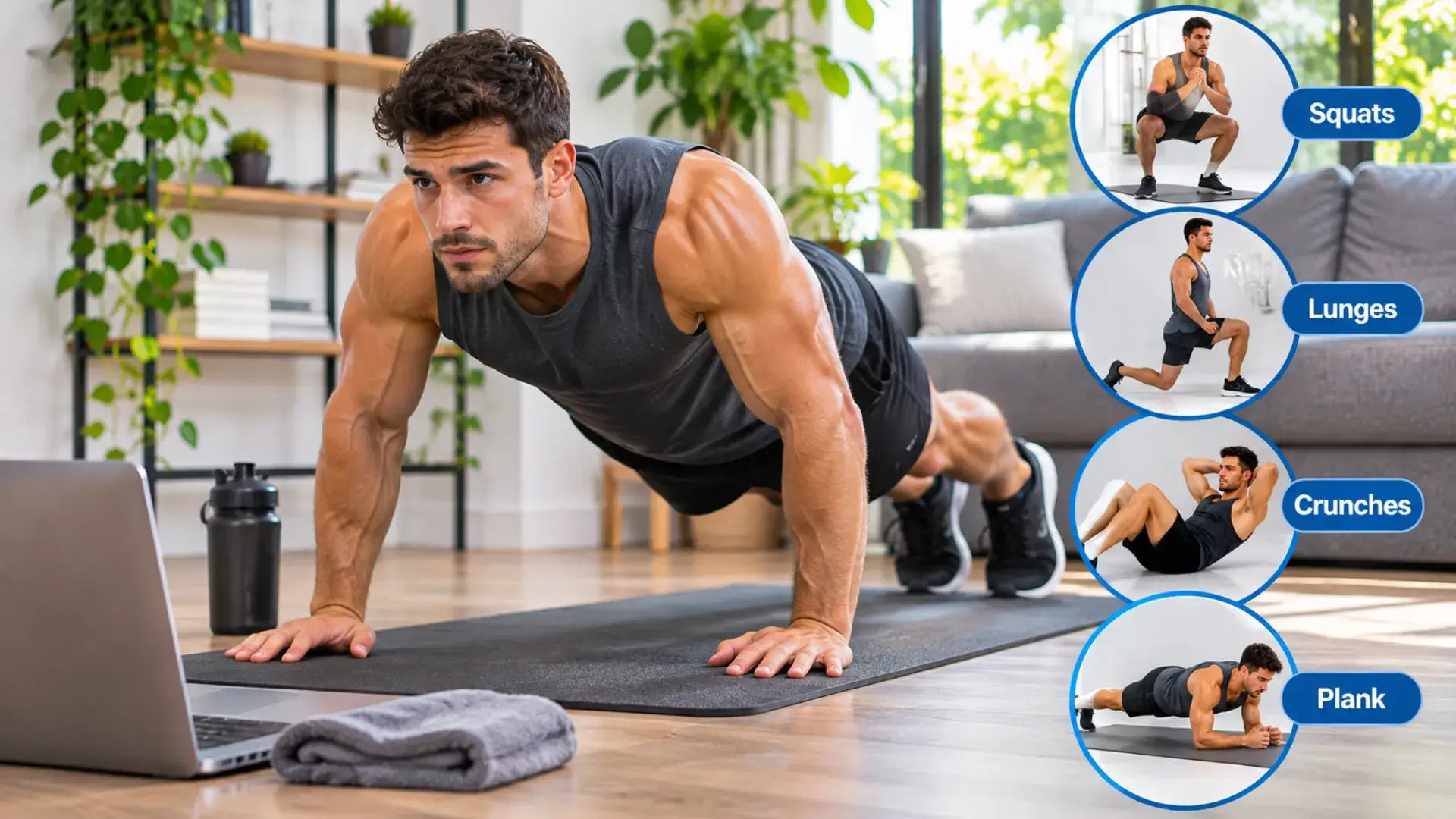
1. Bodyweight Squats
Squats strengthen your quadriceps, glutes, and other lower-body muscles. They also help develop the strength needed for everyday activities such as sitting, standing, and climbing stairs.
How to perform them:
Stand with your feet approximately shoulder-width apart.
Push your hips backward and bend your knees.
Lower yourself as far as you comfortably can while keeping your feet flat.
Push through your feet to return to standing.
Start with 2 sets of 10 repetitions.
2. Push-Ups
Push-ups work your chest, shoulders, triceps, and core.
If regular push-ups are too difficult, begin with wall push-ups or incline push-ups using a stable elevated surface.
How to perform them:
Place your hands slightly wider than shoulder-width apart.
Keep your body aligned from your head to your heels.
Bend your elbows and lower your chest toward the floor.
Push yourself back to the starting position.
Try 2 sets of 5–10 repetitions, adjusting the variation to your ability.
3. Reverse Lunges
Reverse lunges target your legs and glutes while challenging your balance and coordination.
How to perform them:
Stand upright with your feet hip-width apart.
Step one foot backward.
Bend both knees while lowering your body comfortably.
Push through your front foot to return to standing.
Repeat on the opposite side.
Start with 2 sets of 8 repetitions per leg.
4. Glute Bridges
Glute bridges strengthen your glutes and help develop hip stability.
How to perform them:
Lie on your back with your knees bent.
Place your feet flat on the floor.
Tighten your abdominal muscles and squeeze your glutes.
Lift your hips until your body forms a comfortable straight line from your shoulders to your knees.
Lower your hips slowly.
Complete 2 sets of 12 repetitions.
5. Planks
Planks strengthen your core and help improve body stability.
How to perform them:
Position your forearms on the floor.
Extend your legs behind you.
Keep your body aligned without allowing your hips to drop.
Tighten your abdominal muscles and breathe normally.
Start with 15–30 seconds and gradually increase the duration.
6. Mountain Climbers
Mountain climbers combine core engagement with cardiovascular activity.
How to perform them:
Start in a high plank position.
Bring one knee toward your chest.
Return that foot to the starting position.
Repeat with the opposite knee.
Continue alternating at a controlled pace.
Try 2 rounds of 20–30 seconds.
7. Jumping Jacks
Jumping jacks increase your heart rate and provide a simple cardiovascular workout.
How to perform them:
Stand with your feet together and arms at your sides.
Jump your feet outward while raising your arms overhead.
Jump back to the starting position.
Repeat at a comfortable pace.
Try 2 rounds of 30 seconds. If jumping is uncomfortable, use a low-impact version by stepping one foot out at a time.
Sample Weekly Home Workout Plan Without Equipment
If you’re unsure how to organize your workouts, start with this simple schedule.
| Day | Workout |
|---|---|
| Monday | Full-body strength workout |
| Tuesday | 20–30 minutes of walking |
| Wednesday | Full-body strength workout |
| Thursday | Rest or gentle stretching |
| Friday | Full-body strength and core |
| Saturday | Light cardio or outdoor activity |
| Sunday | Rest |
For your strength sessions, combine squats, push-ups, reverse lunges, glute bridges, and planks.
Start with 2 sets of each exercise. Rest between sets and focus on proper technique rather than rushing through the movements.
If you’re new to exercise, you can begin with two workout days per week and gradually build up to three.
For more guidance on organizing your sessions, read our article on how many workouts beginners should do each week.
Can You Build Muscle at Home Without Weights?
Yes. Bodyweight exercises can help you build muscle, particularly if you’re a beginner or returning to exercise.
However, your muscles need an appropriate challenge to keep adapting.
This is where progressive overload becomes important. It means gradually increasing the difficulty of your workouts as you become stronger.
You can do this without buying equipment by:
Increasing the number of repetitions.
Adding another set to an exercise.
Slowing down the lowering portion of a movement.
Using more challenging exercise variations.
Increasing the range of motion when appropriate.
Reducing unnecessary rest time for conditioning exercises.
For example, you can progress from wall push-ups to incline push-ups and eventually to regular push-ups.
If you want to understand how structured training supports muscle development, read our guide on how to build muscle fast.
You can also explore our article on the best strength training program for more ideas on planning workouts and progressing safely.
Can Home Workouts Help You Lose Weight?
Home workouts can support weight loss by increasing your daily physical activity and helping you maintain muscle.
However, exercise is only one part of the process. Your nutrition habits and overall calorie intake also influence how much body fat you lose.
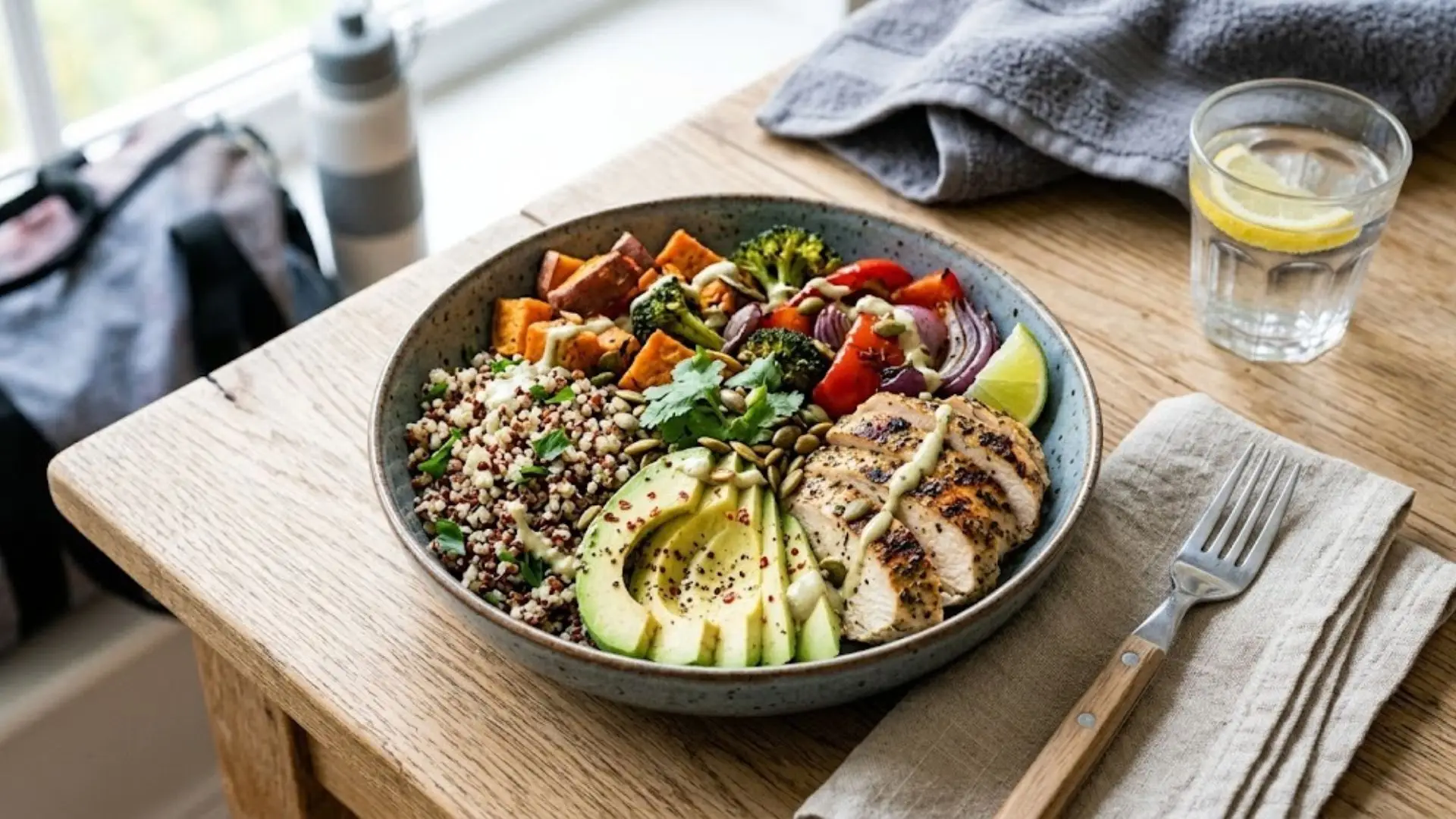
For better results, combine regular workouts with practical eating habits.
Focus on Balanced Meals
Include protein, vegetables, fruits, whole grains, and healthy fats in your daily meals.
Increase Daily Movement
Look for opportunities to move throughout the day. Walking, taking the stairs, doing household activities, and spending less time sitting can all contribute to your overall activity level.
Combine Strength Training and Cardio
Strength training helps preserve muscle, while cardio improves endurance and increases calorie expenditure.
You can learn more about balancing these two types of exercise in our article on whether you should do cardio while building muscle.
For additional fat-loss advice, see our guide on what burns the most body fat.
Common Mistakes to Avoid When Working Out at Home
Home workouts offer flexibility, but it’s still important to train properly.
Here are some mistakes to watch out for.
Doing Too Much Too Soon
Starting with demanding workouts every day can lead to excessive soreness and make it harder to stay consistent.
Begin with manageable sessions and gradually increase your training volume.
Ignoring Proper Form
Performing more repetitions doesn’t always mean you’re getting better results.
Focus on controlled movements and proper technique. Choose easier exercise variations when needed.
Repeating the Same Workout Without Progression
Your body adapts to repeated exercise. If your workouts never become more challenging, your progress may eventually slow down.
Gradually increase repetitions, sets, or exercise difficulty as your strength improves.
Skipping Rest Days
Your muscles need recovery time between demanding workouts.
Allow enough time for recovery, get sufficient sleep, and avoid pushing through pain.
Forgetting About Nutrition
Exercise alone doesn’t guarantee results. Your body needs enough nutrients to support energy, muscle repair, and recovery.
Frequently Asked Questions
How Long Should I Work Out at Home Each Day?
Beginners can start with 20–30 minutes per session. As fitness improves, you can gradually increase workout duration based on your goals and recovery.
Can I Get a Flat Stomach Without Going to the Gym?
You can strengthen your abdominal muscles through exercises such as planks and dead bugs. However, these exercises cannot specifically target belly fat. Reducing overall body fat requires consistent activity and appropriate nutrition.
Is 20 Minutes of Exercise a Day Enough?
Yes, 20 minutes can be a useful starting point, especially if you're currently inactive. The key is to exercise consistently and gradually increase your activity.
Can I Get Fit at Home Without Equipment as a Beginner?
Absolutely. Start with simple movements such as squats, wall push-ups, glute bridges, and walking. As you become stronger, introduce more challenging variations.
Do I Need a Personal Trainer for Home Workouts?
You can exercise independently, but a personal trainer can help you choose appropriate exercises, improve your technique, and create a structured plan based on your goals and available space.
You Don't Need a Gym to Get Fit
Getting fit at home without equipment is possible. Bodyweight exercises can help you develop strength, improve endurance, increase mobility, and establish healthier habits.
Start with simple movements, create a realistic weekly schedule, and gradually make your workouts more challenging. Remember that consistency is more important than trying to complete an advanced routine right away.
You don’t need expensive equipment or hours of exercise to make progress. What matters is finding a routine that fits your lifestyle and sticking with it.
Get a Personalized Home Workout Plan
At Potomac Online Personal Training, we help adults create customized fitness programs that fit their goals, schedules, and available equipment.
Whether you want to lose weight, build muscle, improve your strength, or exercise more consistently, you can get guidance without depending on a traditional gym setup.
Contact Potomac Online Personal Training today to schedule your free consultation and discover how a personalized home workout plan can help you reach your fitness goals.